


Match Materials to the Product Brief
Pilevanta coordinates carpet tile supply for importers, distributors, contractors and private label buyers. Material preparation starts with the selected construction and approved specification. A similar surface appearance does not establish that two products use the same fiber, yarn or backing.
Before sampling or bulk production, we review the intended application, fiber preference, pile construction, color reference and backing requirements with the responsible production facility. Available combinations depend on the series; material changes require confirmation before they enter the order specification.
Confirm Fiber and Yarn Requirements
Fiber type is one part of yarn selection. Yarn thickness, texture, twist and color combination can also influence the finished carpet surface. Buyers comparing quotations should check whether these details refer to an existing construction or a proposed development.
Where the reference sample’s composition is unknown, we record the requested appearance separately from the material specification. We should not describe a replacement as an exact match without supporting confirmation.
Our custom fiber and yarn options provide a starting point for reviewing material preferences and feasible alternatives.
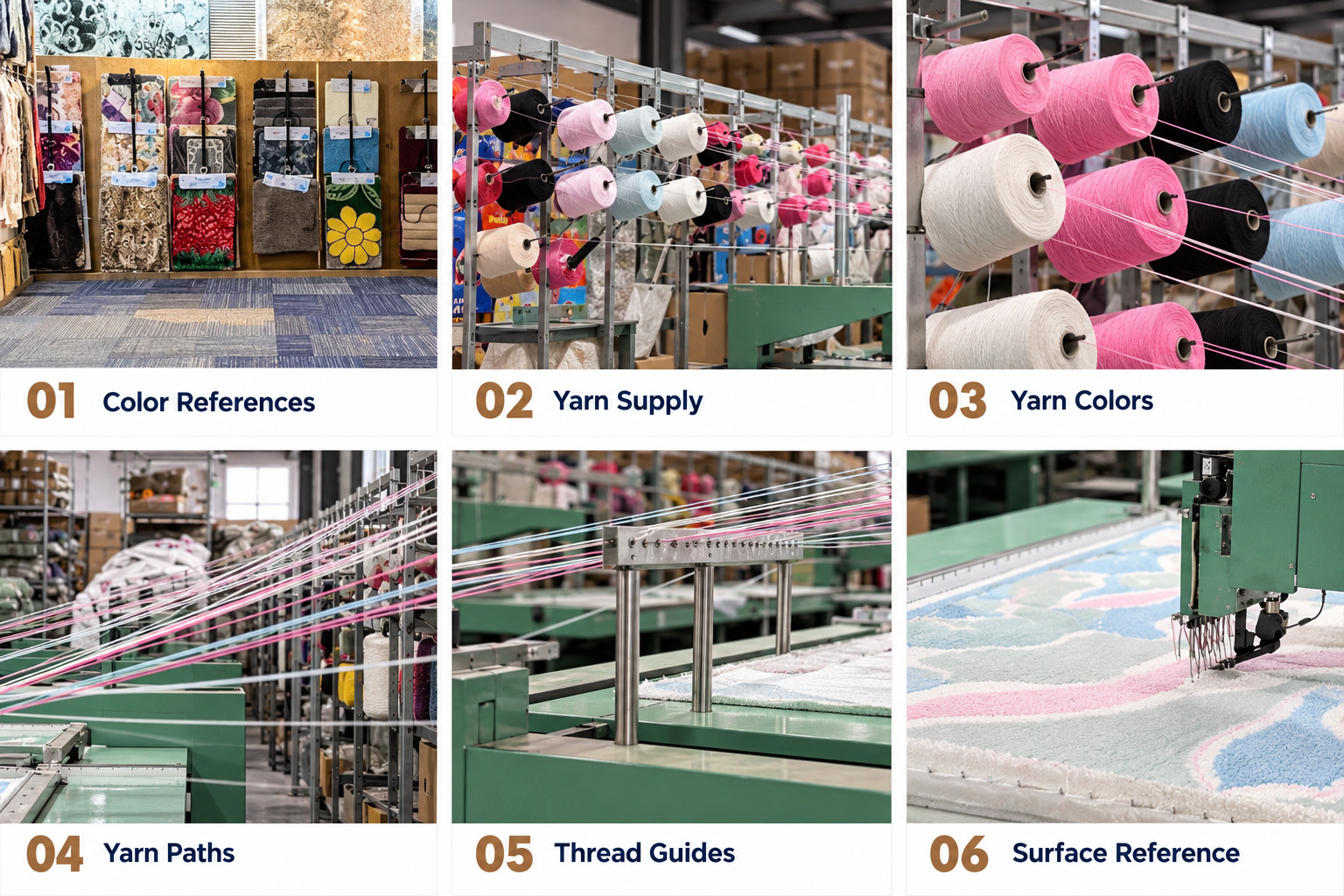
Establish a Usable Color Reference
Physical yarn or carpet samples are preferable when shade matching matters. Photographs help communicate a direction, but lighting, camera settings and screen differences can change the apparent color.
The production brief should identify the approved reference, relevant color codes and any mixed-yarn effect. Color codes alone do not define the finished appearance of a textured surface.
The color preparation route depends on the selected yarn and construction. A separate dyeing stage is not required for every series. Changes to yarn or color combinations may affect material availability, sampling, MOQ and scheduling.
 Review Primary Backing and Related Materials
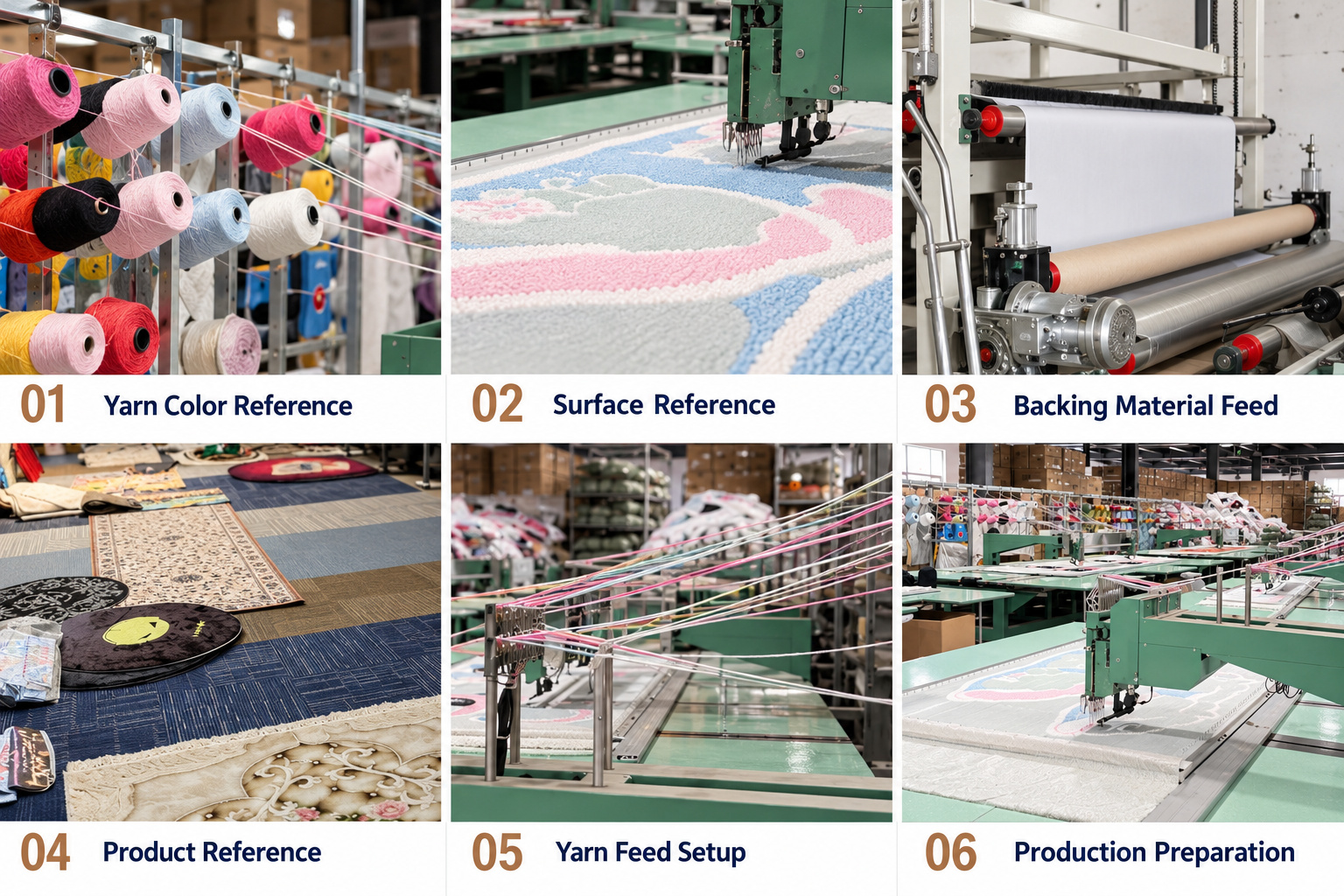
For tufted constructions, the primary backing supports yarn insertion during pile formation. It is different from the finished tile backing and should be identified separately when specifications are reviewed.
The face construction and proposed backing need to work together. A change in yarn, pile structure or backing may affect total thickness, weight and the subsequent production route.
Material preparation therefore follows the complete approved construction. It should not proceed from an isolated request such as “heavier yarn” or “thicker backing” without reviewing the resulting product.
Check Identification and Material Condition
Relevant preparation checks include material identification, color reference, visible condition and lot information where available. Yarn supplies also need to suit the selected production setup.
Lot references help connect materials with production records, particularly where an order includes several colors or repeat deliveries. Replacement materials should be reviewed before use rather than treated as automatically equivalent.
These checks support production consistency. They do not establish fire, emissions, recycled-content or other performance claims; supporting documentation must apply to the relevant material or finished construction.
Connect Sample Approval with Bulk Preparation
The approved development sample should be accompanied by a written record of its material and construction details. Our carpet tile sample development process helps establish this reference before bulk arrangements are confirmed.
If a material substitution becomes necessary, we review its effect on appearance, cost and timing, and whether a revised sample is needed. Once materials are confirmed, preparation moves into the applicable carpet tufting process.
 What We Need for a Quote
Send your reference sample or image, intended application, preferred fiber, pile construction, colors, backing requirements and estimated quantity per design. Include sample needs, branding, packaging, destination and shipping term.
Identify which requirements are fixed and which can be reviewed. This helps us assess material options, sample scope, MOQ and lead time before confirming the quotation.