


Cutting turns backed carpet material into individual tiles ready for layout checks, finishing and packing. For buyers, the key concern is whether the finished pieces match the approved dimensions and fit together consistently.
Pilevanta Carpet Tiles coordinates cutting requirements with the responsible production partners for wholesale, OEM and private label orders. Tile dimensions, shape, pattern orientation and inspection criteria are reviewed against the selected construction before bulk production proceeds.
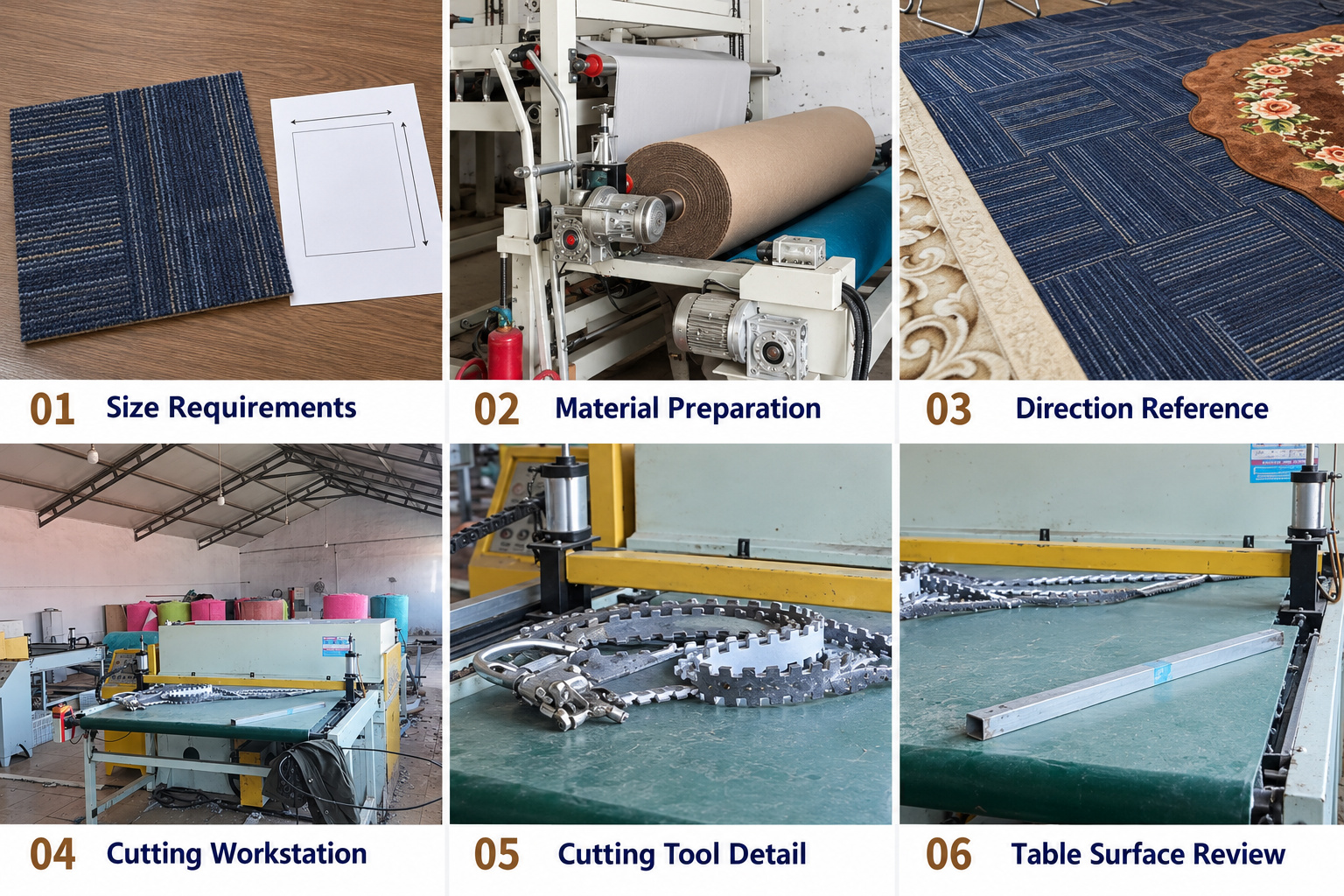
Confirm Finished Dimensions Before Cutting
The order specification should identify the finished tile length, width and shape. Square tiles, rectangular planks and special shapes require different cutting arrangements, so feasibility is checked for the selected product series.
Buyers should also distinguish between nominal dimensions and agreed dimensional tolerances. A reference photograph alone cannot establish acceptable variation. Where a project has specific installation requirements, these should be discussed during custom size and shape review.
Prepare the Backed Material
Before cutting, the backed material needs to reach the condition required by its construction. Applicable cooling or conditioning arrangements depend on the backing system and production route.
Material is reviewed for folds, visible distortion and surface contamination that could affect positioning or finished appearance. Cutting cannot correct every issue introduced earlier in production. Material with an unresolved backing or surface concern should be reviewed before it moves forward.
 Plan Pattern Direction and Cutting Layout
Stripes, linear textures and geometric designs need a clear orientation reference. The cutting layout should consider how the pattern sits within each tile and how neighboring pieces will appear in the intended installation.
Some designs are intended for directional installation, while others suit quarter-turn or other agreed layouts. These arrangements should follow the selected product guidance and approved sample. Cutting a patterned material into equal pieces does not automatically create a continuous pattern across every joint.
Cut to the Approved Format
The cutting method is selected according to the backing, material thickness, tile format and production arrangement. Equipment suitability is reviewed for the actual construction rather than assumed from a machine photograph.
During this stage, positioning and cutting consistency matter alongside dimensions. Visible edge damage, distorted corners or irregular outlines need attention before pieces continue to finishing. Special shapes may require separate tooling and sample development.
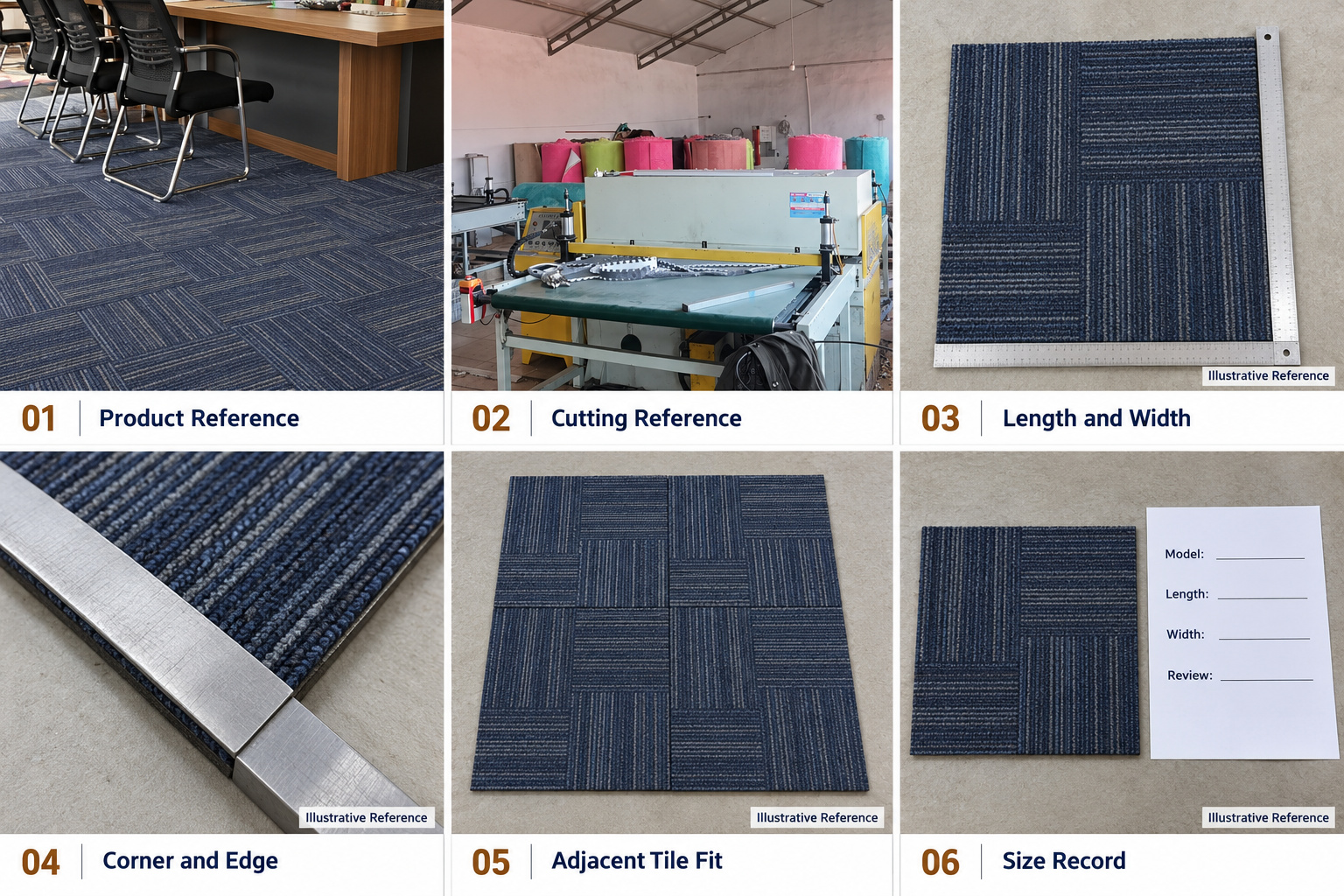
Check Dimensions and Adjacent Tile Fit
Cut pieces are checked against the agreed specification using appropriate measuring methods. Length, width, squareness and edge condition are relevant to how tiles fit together.
An adjacent tile layout helps reveal visible gaps, uneven joints or orientation differences. This complements dimensional measurement; it does not replace it. Detailed acceptance requirements can be addressed through dimensional and backing inspection.
 Keep Product Identification Through Finishing
After cutting, pieces should remain associated with the correct model, color and batch reference. Mixing visually similar products can create problems during inspection, carton packing and installation.
Tiles then move to applicable edge trimming and finishing before final review. Packing requirements should preserve flatness and protect corners and edges during handling.
What We Need for a Quote
Send your product reference, intended application, finished dimensions, shape, material and backing requirements, quantity by color, and preferred installation direction. Include any dimensional tolerances, sample approval requirements, logo or carton labeling needs, destination and shipping term.
We review the cutting format, sampling needs, minimum order quantity and production schedule for the selected series before confirming the quotation.