


Surface and color inspection compares finished carpet tiles with the agreed product reference. The review covers visible pile condition, pattern appearance, contamination and differences between pieces intended for the same order.
Pilevanta Carpet Tiles coordinates inspection requirements with the responsible production partners for wholesale, OEM and private label orders. Approved samples, color references and installation direction help establish what buyers expect before bulk products are reviewed.
Establish the Approved Appearance Reference
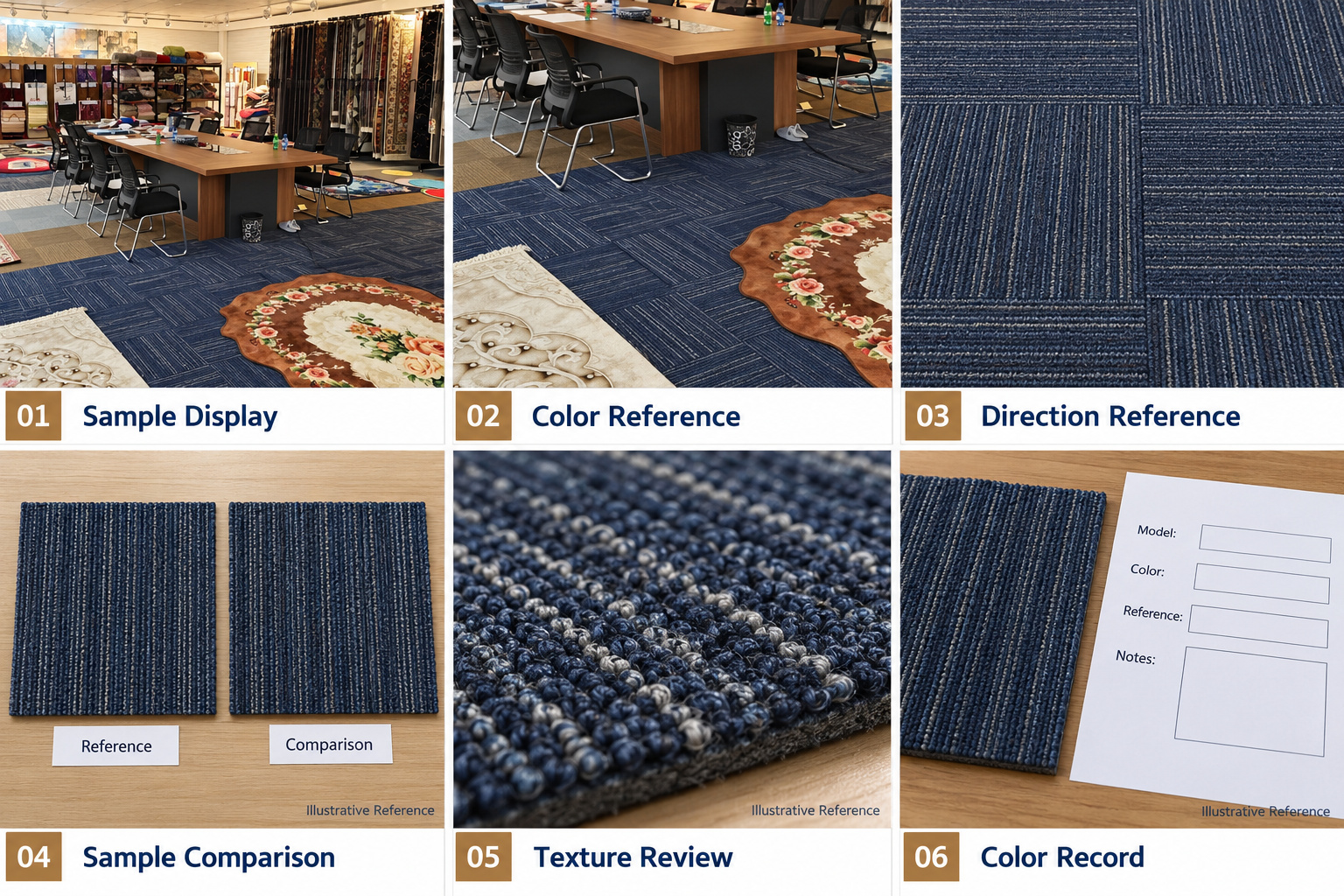
The reference should identify the product model, color, pile construction and pattern. A physical approved sample provides a more useful basis for comparison than a photograph viewed on different screens.
For custom developments, the agreed reference should also clarify whether the target is a solid shade, a mixed yarn effect or a directional pattern. These distinctions affect how variation is assessed. Sample requirements can be established during custom color and pattern review.
Compare Samples Under Consistent Lighting
Reference and production pieces should be viewed together under agreed lighting conditions, with their pile direction aligned. Changing the viewing angle or rotating one piece can make the same construction appear lighter or darker.
Photographs can help document a concern, but camera exposure, white balance and screen settings affect the result. Where instrumental color measurement is required, the method and acceptance criteria need separate agreement. Visual comparison alone does not establish a numerical color difference.
 Review the Pile Surface
The face is reviewed for visible missing tufts, irregular yarn ends, unexpected pile changes and localized damage. Loose fibers, dust or packaging debris should be distinguished from defects within the construction.
Textured and mixed yarn products naturally have a different appearance from uniform solid colors. The approved sample helps determine whether a visible feature belongs to the intended design or requires attention. Findings should be recorded clearly enough to locate the affected piece or area.
Check Pattern and Installation Direction
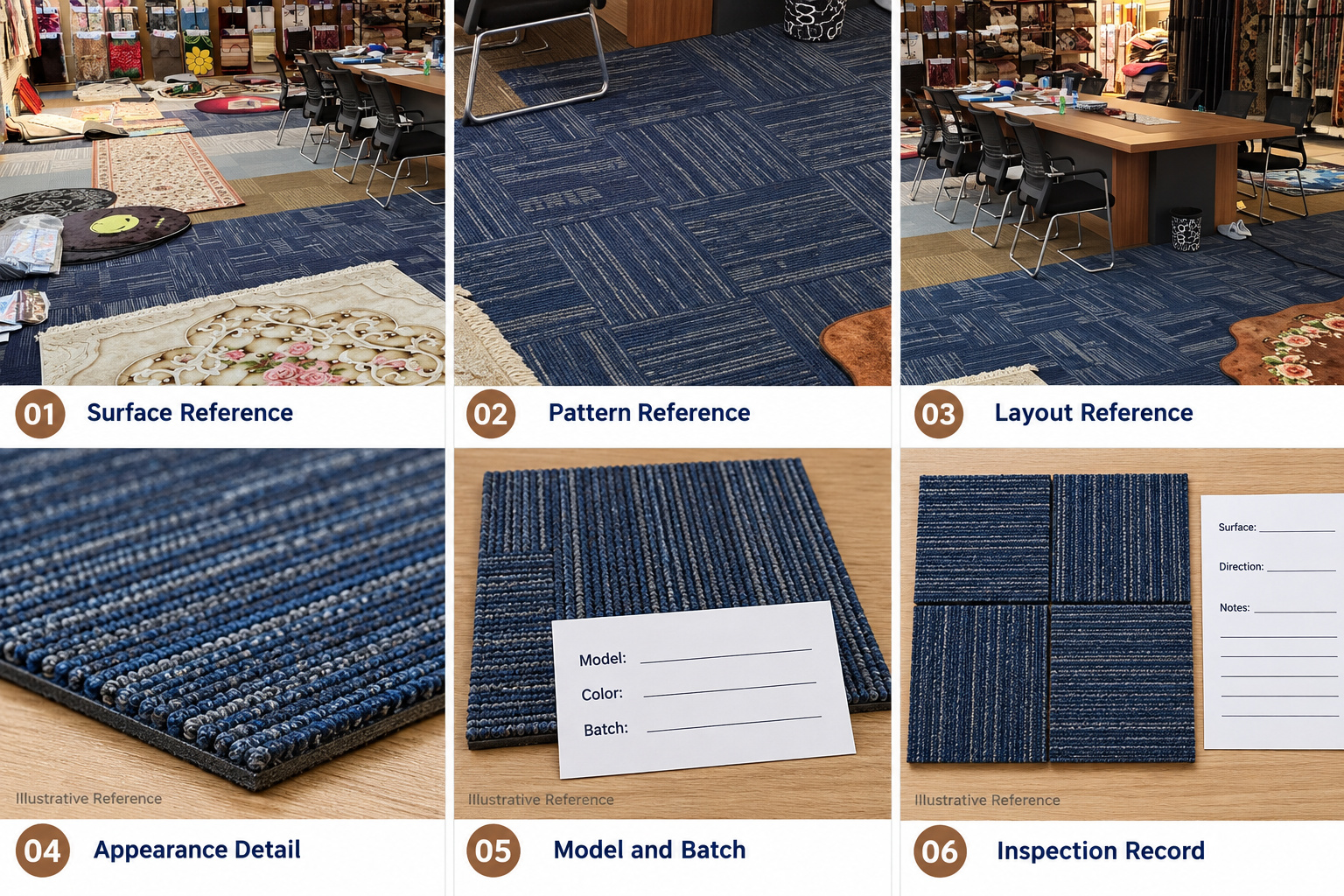
Stripes and geometric designs need a consistent orientation reference. Adjacent pieces are laid out according to the selected product’s installation guidance to review pattern placement and overall appearance.
A directional design may produce deliberate shading when tiles are rotated. Likewise, some patterns are designed for a random visual effect rather than continuous matching across every joint. Inspection should follow the approved layout expectation established during carpet tile sample development.
Keep Color and Batch Identification Together
Model, color and batch information should remain connected to the inspected pieces. Similar shades can be difficult to distinguish once loose tiles are mixed.
When an order includes more than one production batch, any requirements for separating cartons or allocating material to installation areas should be discussed before shipment. Batch identification supports traceability; it does not by itself guarantee an invisible match between separate production runs.
 Record Findings Before Packing
Inspection records should connect observations with the applicable product reference and agreed acceptance criteria. Pieces requiring further review are identified before they move into packing.
Surface appearance is considered alongside dimensions, backing condition and edge finish during final quality inspection. A satisfactory visual review does not replace construction-specific performance testing where that is required.
What We Need for a Quote
Send your product reference, intended application, tile dimensions, pile and backing requirements, and quantity by color. Include a physical color reference where available, the intended installation layout, appearance acceptance requirements and any requested inspection documentation.
Please also provide logo or packaging needs, destination and shipping term. We review sample arrangements, inspection scope, minimum order quantity and the production schedule for the selected series before confirming quotation terms.