


Define the Surface Before Tufting
The tufting stage forms the carpet surface by inserting yarn through a primary backing. For carpet tile buyers, the key question is whether that surface matches the agreed construction, appearance and intended installation.
Pilevanta coordinates specifications and production requirements with the responsible manufacturing facility. We review the selected series, yarn, pile structure and design before confirming the applicable production route. Not every reference pattern or pile combination can be reproduced using an existing setup.
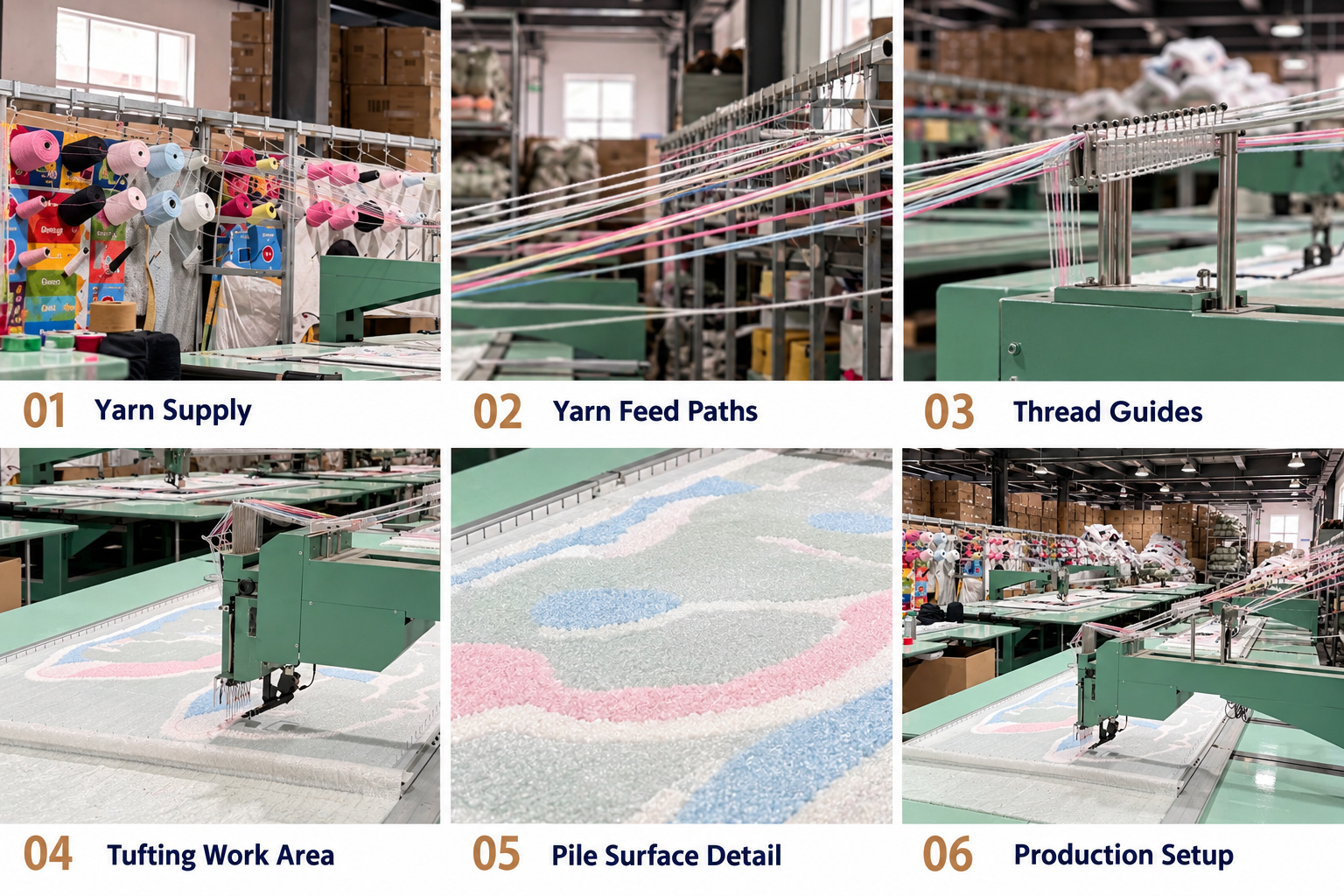
Prepare Yarn and the Primary Backing
Yarn selection and feed arrangements need to follow the approved construction. Fiber type, yarn characteristics and color combinations influence the surface that tufting produces.
The primary backing supports yarn insertion. It must suit the proposed construction and subsequent processing; it is separate from the finished tile backing.
Our raw material and yarn preparation page explains the material references needed before this stage. Where a substitution is proposed, its effect on appearance and sampling should be reviewed before production continues.
Establish the Pile Construction
Loop pile, cut pile and combined constructions create different textures. Their feasibility depends on the selected series and production arrangements. A photograph can communicate the preferred style, but a physical sample is more useful for confirming the actual surface.
Pile height should be recorded separately from total tile thickness. Buyers should also distinguish pile weight from total tile weight. Increasing height alone does not define surface density or establish suitability for a particular application.
For development orders, our custom pile construction review connects the requested texture with a feasible sample specification.
 Review Pattern and Installation Direction
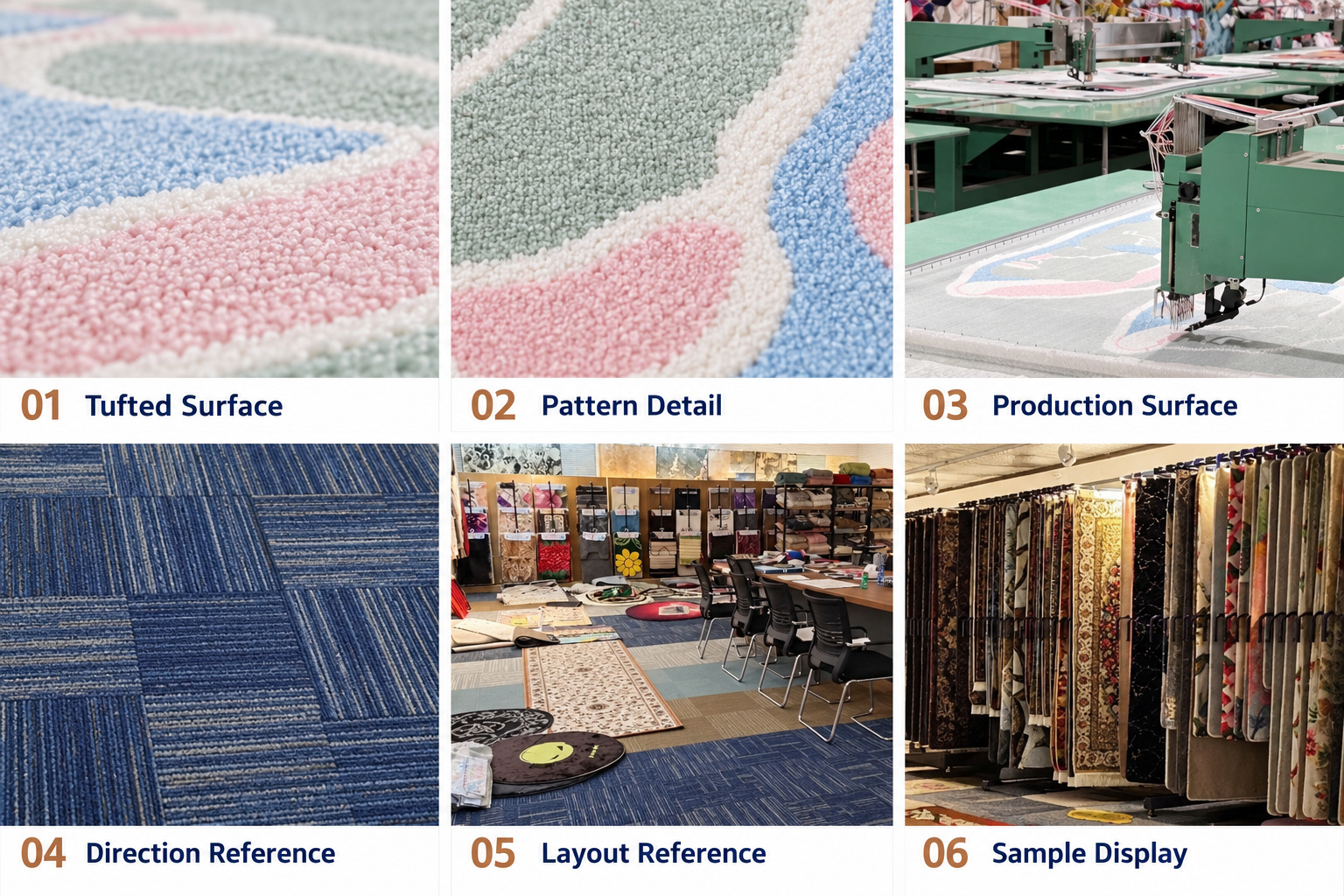
Pattern development needs to consider how the tufted material will later be cut into tiles. Stripe direction, repeat scale and the intended layout can affect the appearance of neighboring pieces.
The approval reference should identify whether installation is directional, quarter-turn or another agreed arrangement. Pattern alignment must be assessed against that intended layout rather than assumed from one small sample.
Changes to yarn colors, repeat size or pile structure may require revised sampling and can affect quotation scope, MOQ and scheduling.
Check the Tufted Surface
Relevant surface checks include missing or irregular tufts, visible yarn differences, unintended lines and pattern variation. Samples should be viewed in a consistent direction and under comparable lighting.
A directional surface can appear lighter or darker when rotated. This should be distinguished from an actual shade difference during sample review.
Tufted material is an intermediate product. Its appearance requires further review after backing, finishing and cutting, since approval at this stage does not replace finished tile inspection.
 Carry the Approved Reference Forward
Sample comments should identify the required correction clearly: shade, texture, pile appearance or pattern direction. A general request such as “make it denser” needs clarification before the construction changes.
The approved sample and written specification then provide a reference for subsequent backing coating and lamination. For repeat orders, material availability and any construction changes should be reviewed before a new production schedule is confirmed.
What We Need for a Quote
Send your carpet tile reference, intended application, dimensions, preferred fiber, pile structure, colors and estimated quantity per design. Include backing requirements, sample needs, branding, packaging, destination and shipping term.
If pattern continuity or installation direction matters, provide a layout image or drawing. We can then review sampling requirements, construction feasibility, MOQ and lead time for the proposed order.