


Confirm the Color Route for the Selected Series
Pilevanta supplies carpet tiles for importers, distributors, contractors and private label buyers. We coordinate color requirements with the responsible production facility, starting with the selected yarn and carpet construction.
Yarn dyeing is not a separate production stage for every carpet tile order. Some constructions use yarn with color incorporated during fiber production; others may use dyed yarn. The applicable route must be confirmed before promising a custom shade, sample schedule or repeat-order match.
Establish a Physical Shade Reference
A physical yarn or carpet sample gives a more useful starting point than a screen image. Buyers should identify whether the priority is matching an existing floor, developing a new collection or following a brand color direction.
A color code helps communicate the target, but it does not fully describe a textured carpet surface. Fiber appearance, yarn combinations and pile direction influence the result.
Our custom carpet tile colors and patterns review connects these references with the proposed product construction.
Review Yarn and Color Feasibility Together
A requested shade needs to be assessed against the fiber, yarn specification and available production route. An existing yarn color may offer a different sampling and order arrangement from a newly developed shade.
For mixed-color surfaces, each yarn component and its relative visual effect need attention. Matching one yarn does not necessarily reproduce the overall carpet appearance.
We review feasible options before confirming development costs, MOQ and timing. A change in fiber or yarn construction can require a new color assessment, even when the target code remains unchanged.
 Approve Color on the Intended Carpet Surface
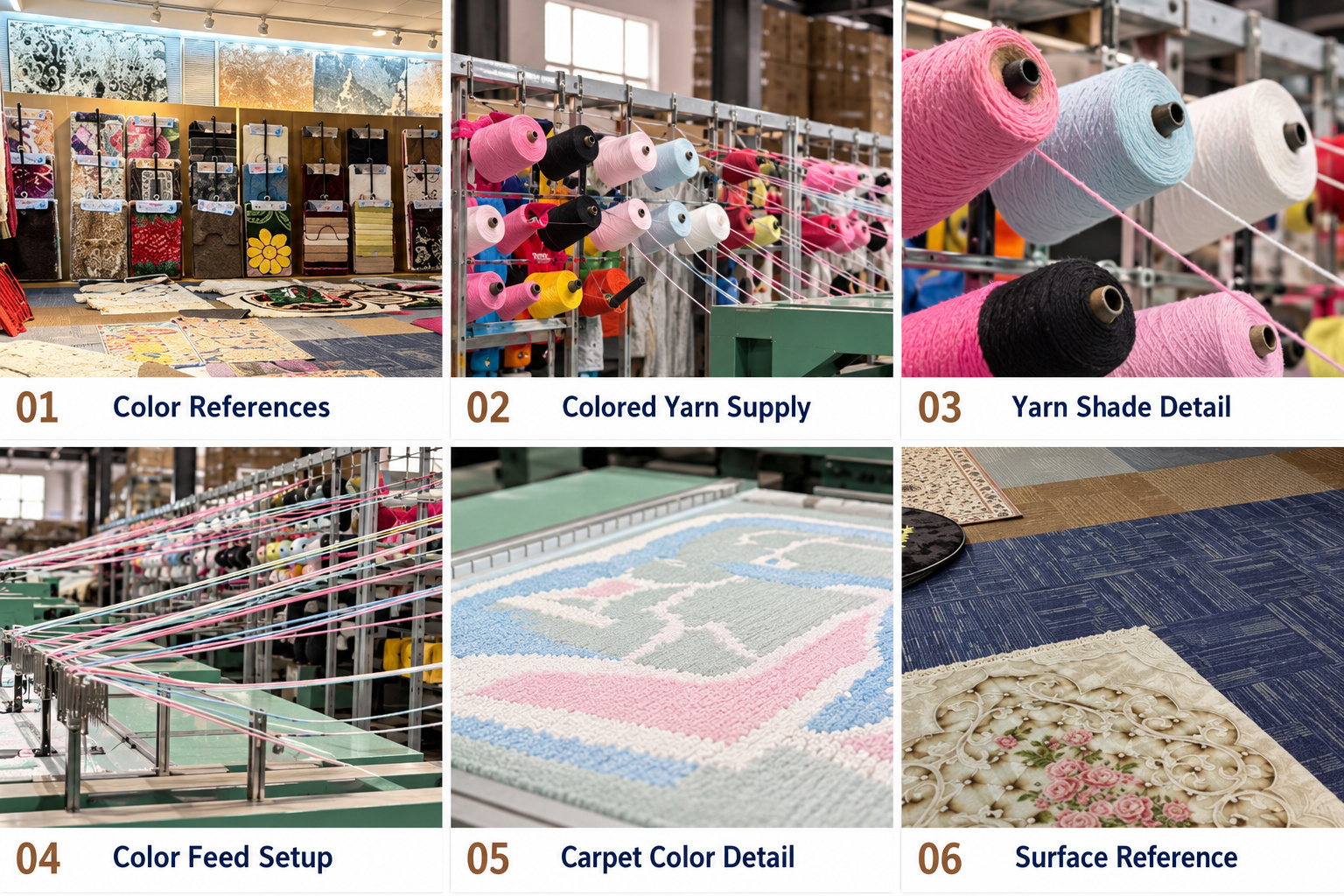
Where a new yarn shade is developed, the preliminary color sample should be identified separately from the finished carpet approval sample. The confirmation method depends on the applicable yarn and coloring route.
Color should then be reviewed in the intended pile construction. Loop and cut surfaces, yarn mixtures and directional textures can change how the same shade appears.
Our carpet tile sample development process provides the stage for recording shade comments and confirming whether another sample is required before bulk production.
Separate Shade Differences from Directional Effects
Samples should be compared under consistent lighting and in the same pile direction. Rotating a directional carpet can create a lighter or darker appearance that needs to be distinguished from a color difference.
For project orders, buyers should provide the intended layout and identify any requirement to place products together. An older installed carpet may also have changed through use or exposure, so its original product code alone is insufficient for matching.
Any agreed shade tolerance or instrumental assessment method should be recorded before production; it should not be assumed from visual approval.
Maintain Batch References for Bulk Orders
The approved color reference should remain linked to the product specification and relevant yarn or production lot information where available. Different colors within an order need clear identification.
Repeat orders require a fresh availability and matching review. We do not promise an exact match across separate batches without assessment.
Finished product review continues through surface and color inspection, with model, color and batch identification carried into carton labels and packing records.
 What We Need for a Quote
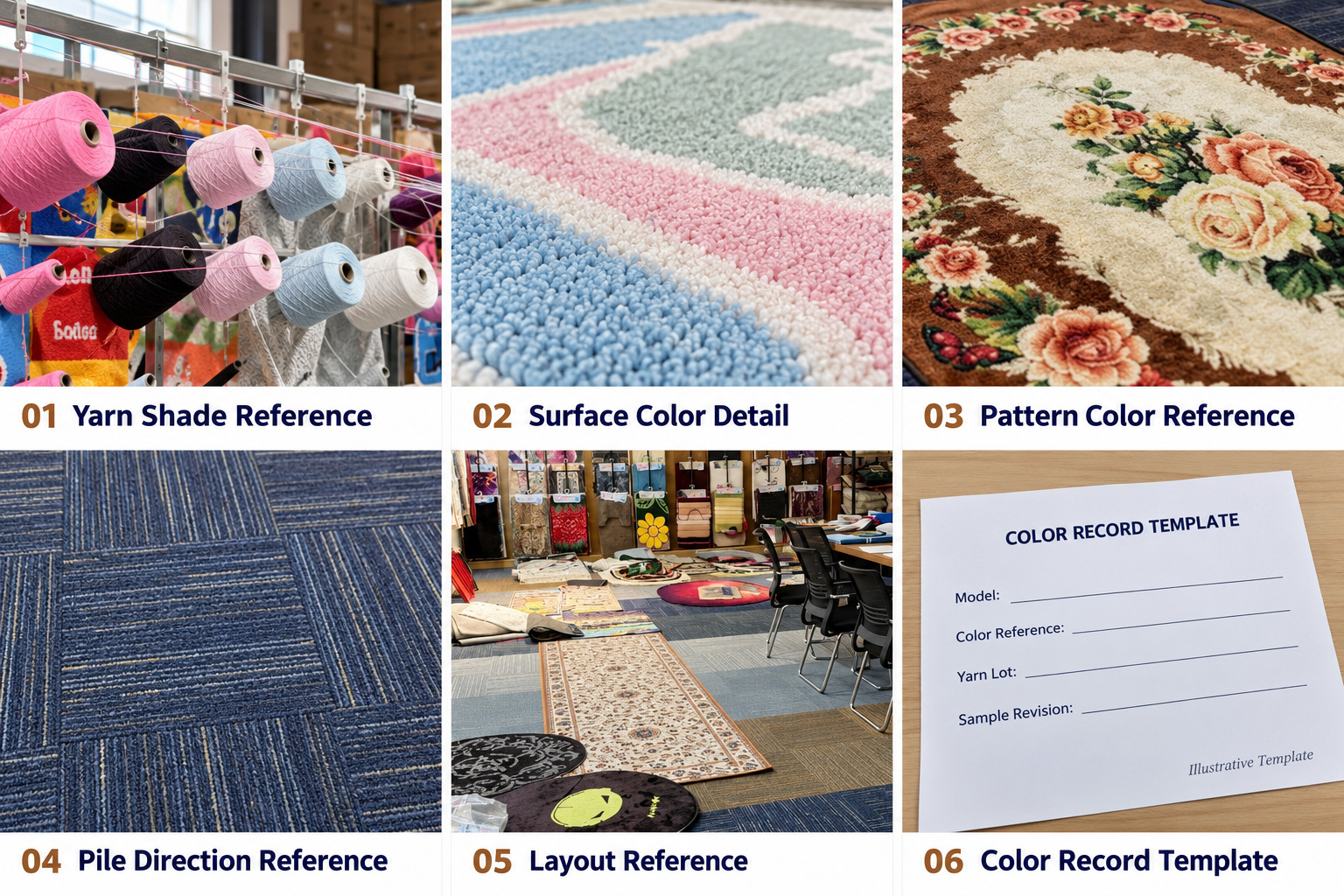
Send your physical reference or clear image, target color codes, preferred fiber, pile construction, backing, dimensions and quantity per color. Identify whether colors will be installed together or matched to an earlier order.
Include sample needs, branding, packaging, destination and shipping term. We can then review the color route, approval requirements, MOQ and proposed lead time.