


Confirm the Role of the Primary Backing
Primary backing is the supporting fabric through which yarn is inserted during tufting. It forms part of the carpet construction and is different from the finished tile backing applied during subsequent processing.
Pilevanta coordinates carpet tile specifications with the responsible production facility for wholesale, OEM and private label orders. Primary backing preparation follows the selected yarn, pile construction and production route. A change to this supporting material needs review even when the finished surface is intended to look the same.
Select Material for the Complete Construction
The proposed primary backing must suit yarn insertion, material handling and the later backing process. Material type and construction should be confirmed for the selected series rather than assumed from a reference photograph.
Buyers developing a specification should identify any fixed material requirements before sampling. Where the reference sample’s internal construction is unknown, we distinguish the requested appearance from the proposed production specification.
Our raw material and yarn preparation review brings these related material requirements together before production arrangements are confirmed.
Check Identification and Roll Condition
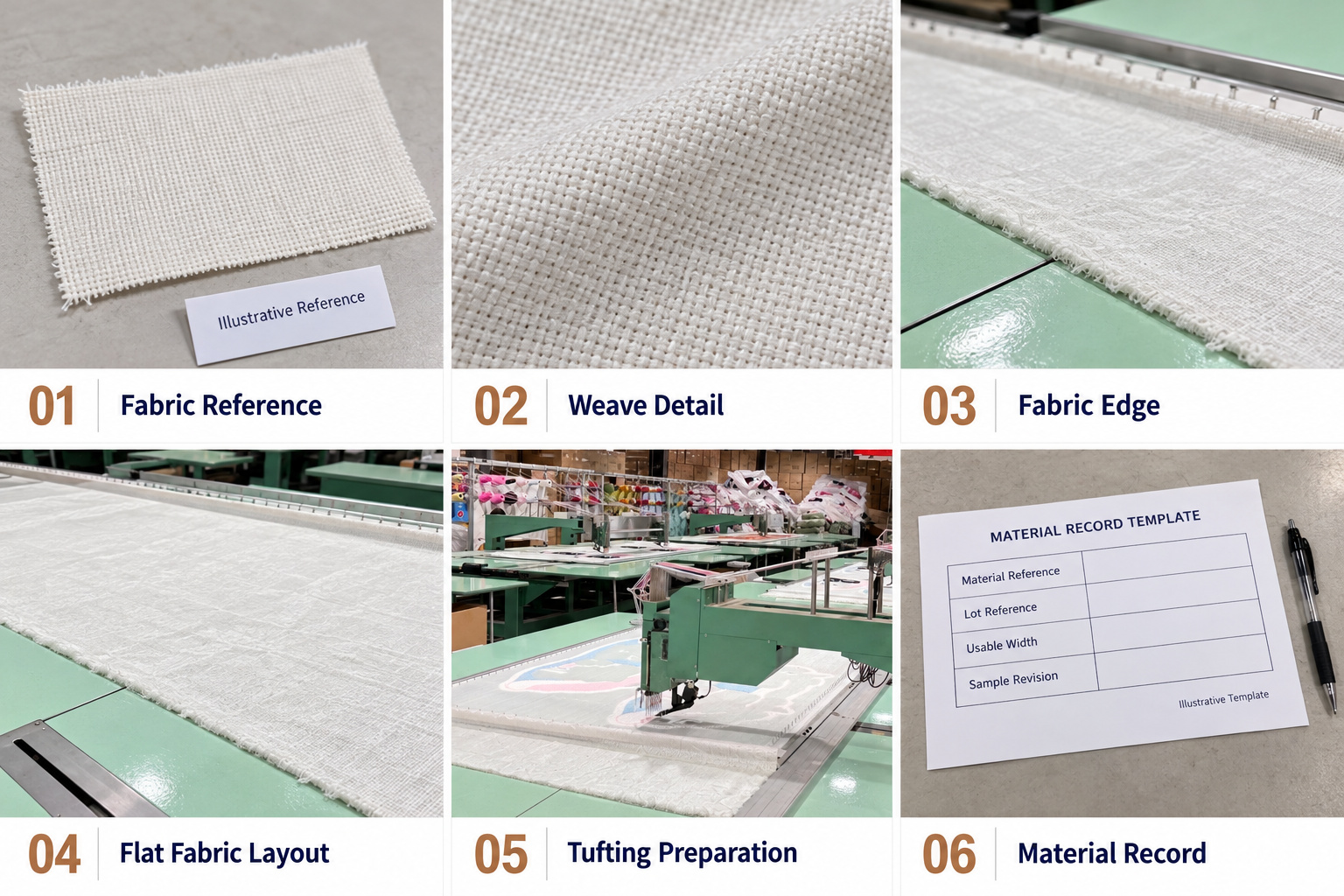
Preparation should include checking the material against the production requirement and reviewing its visible condition. Relevant points include roll identification, usable width, damaged edges, creases, contamination and other irregularities that could interfere with processing.
Available lot references help connect material with the production record. Storage and handling should protect rolls from moisture, dirt and physical damage.
A roll that appears suitable from the outside may still reveal an issue as it is opened. Material concerns need assessment before the affected section moves into tufting.
 Prepare the Fabric for Consistent Feeding
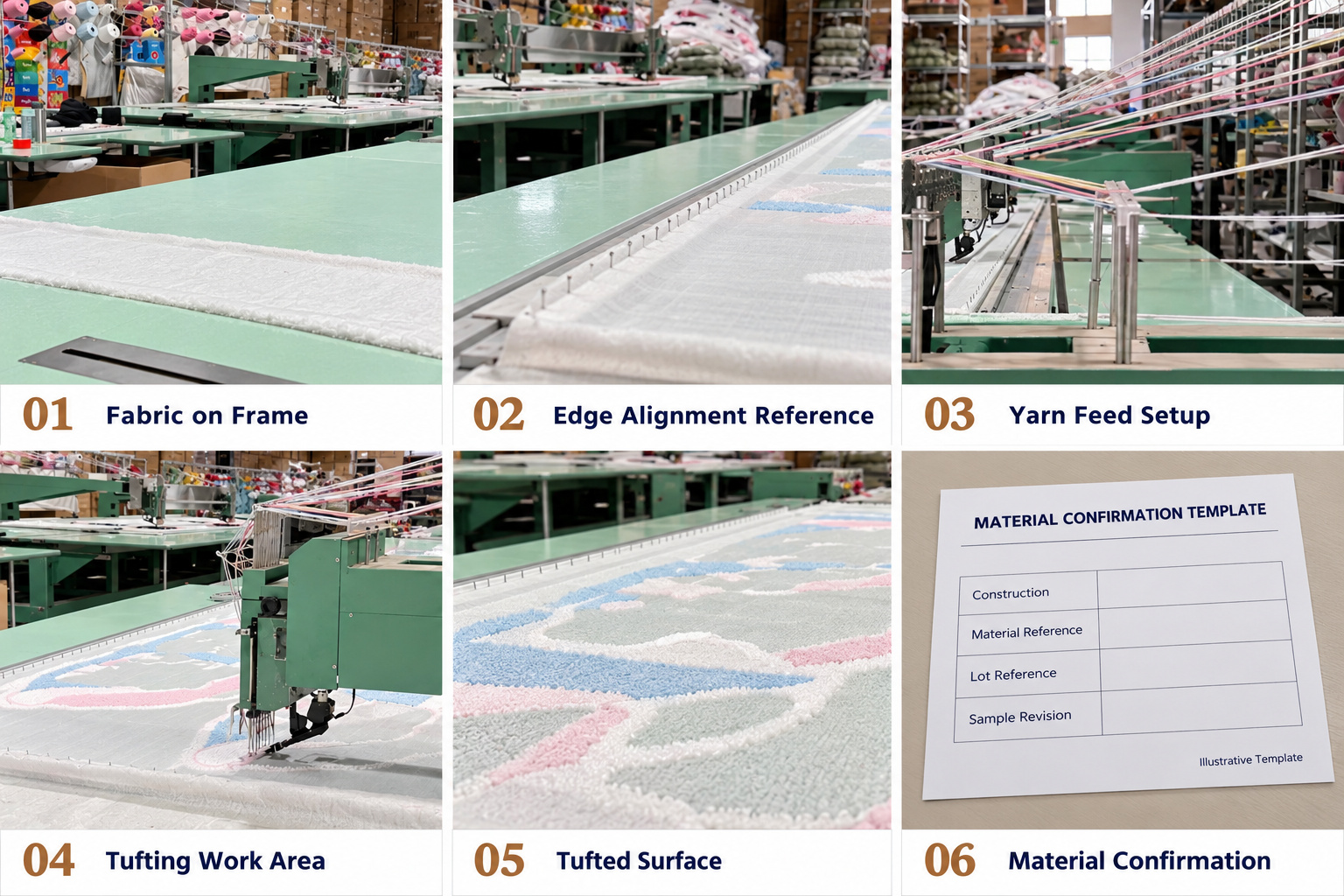
The fabric needs to feed through the applicable tufting setup without unintended folds or misalignment. Roll positioning, alignment and the appropriate feed arrangement influence how the supporting fabric travels through production.
Preparation also needs to consider usable material width and the planned production layout. Edge loss or unsuitable roll dimensions can affect material usage and quotation assumptions.
Machine settings depend on the material and construction. We do not apply one universal tension or feed specification across every carpet tile series.
Review Compatibility During Sampling
A proposed backing fabric should be assessed with the intended yarn and pile construction. The sample review considers whether the combination produces an acceptable surface and remains suitable for subsequent processing.
Relevant concerns include visible distortion, irregular yarn placement or damage associated with processing. These observations need to be considered alongside the finished sample, rather than evaluated as isolated material features.
The carpet tufting process page explains how yarn and primary backing come together to form the carpet surface.
Control Changes Before Bulk Production
Once the sample construction is approved, its material details should remain linked to the written specification. An alternative primary backing should be reviewed before substitution, including whether further sampling is required.
Compatibility also extends to backing coating and lamination. Approval of the supporting fabric alone does not establish the performance of the completed tile.
Changes may affect material availability, development cost and lead time. Their impact should be confirmed before the revised construction enters bulk production.
 What We Need for a Quote
Send your carpet tile reference, intended application, dimensions, yarn preference, pile construction and finished backing requirements. Include any specified primary backing material and estimated quantity per design.
Provide sample needs, branding, packaging, destination and shipping term. We can then review the proposed material combination, sampling scope, MOQ and production schedule.