


Edge finishing addresses visible issues around cut carpet tiles before final inspection and packing. Loose yarn ends, backing projections and damaged corners can affect presentation and make joints more noticeable during installation.
Pilevanta Carpet Tiles coordinates finishing requirements with the responsible production partners for wholesale, OEM and private label orders. The selected construction and approved sample guide what can be trimmed, how edges should appear and which defects require further review.
Establish the Approved Edge Reference
Finishing starts with a clear reference for the intended product. Buyers should review the tile face, backing edge and corners together, particularly when comparing samples from different constructions.
Commercial carpet tiles commonly have cut edges rather than the decorative binding used on some rugs. Binding, overlocking or a special edge treatment should therefore be discussed separately. Availability depends on the product and intended application.
The approved reference should connect to the dimensions established during carpet tile cutting and sizing.
Review Cut Edges Before Trimming
Cut pieces are reviewed for loose yarn, uneven backing projections, visible separation and corner damage. This helps distinguish a removable finishing issue from a cutting or construction problem.
A short yarn end may be suitable for careful trimming. A distorted outline, missing pile or damaged backing may require a different response. Finishing should preserve the agreed tile dimensions and face appearance.
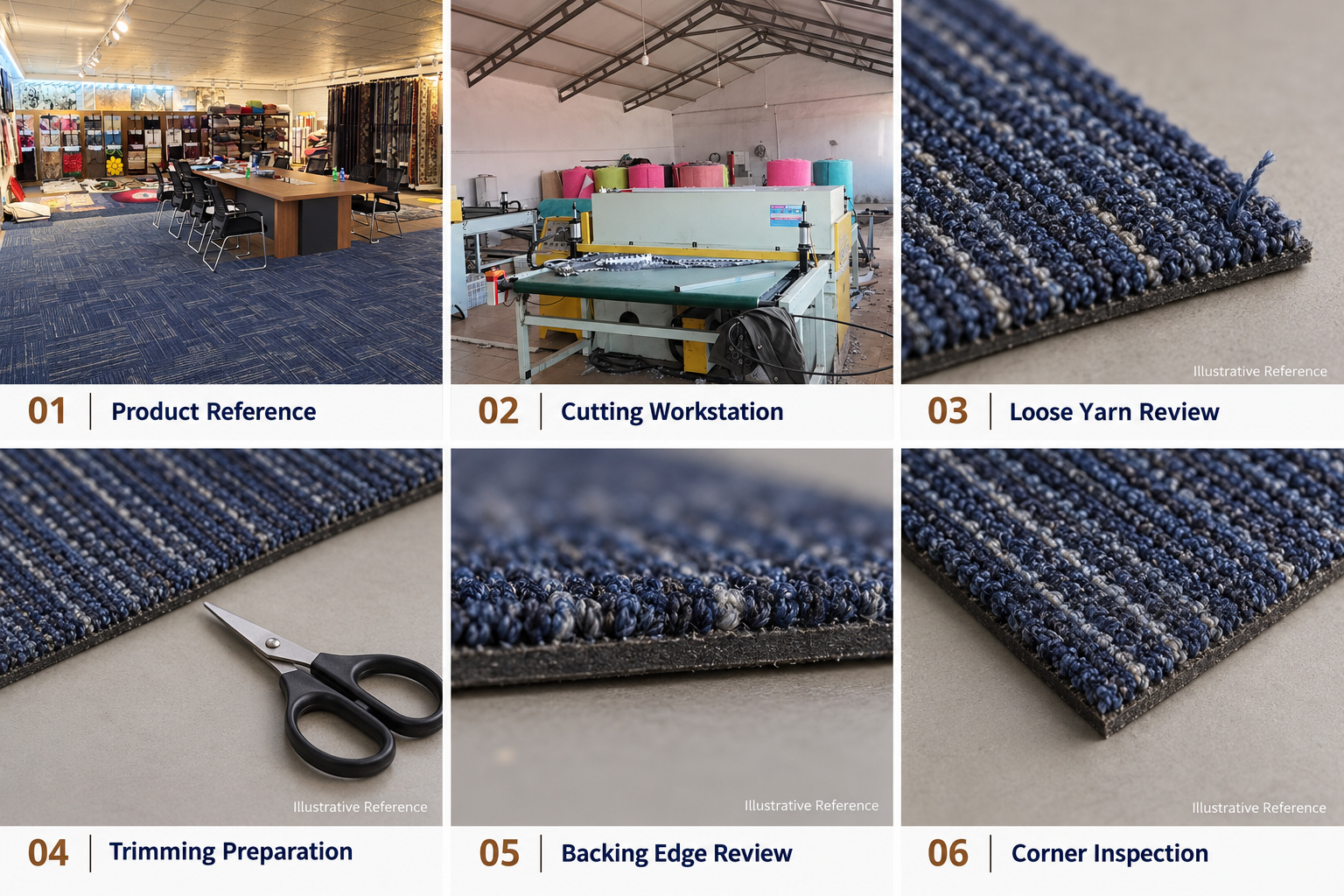 Remove Loose Ends Without Damaging the Pile
Where trimming is appropriate, protruding yarn ends are addressed without cutting into the surrounding pile or changing the intended surface texture. Loose material is cleared so that the finished edge can be reviewed.
Loop pile, cut pile and textured constructions need different handling. Pulling a loose yarn can disturb neighboring tufts, so a visible strand should not automatically be treated as something to pull away.
Specific edge stabilization or sealing requirements need separate confirmation for the selected series.
Check Backing Edges and Corners
The backing perimeter is checked alongside the carpet face. Projections, damaged sections or visible layer separation can affect handling and the appearance of adjacent joints.
Any correction needs to remain within the agreed specification. Trimming away substantial material to improve an edge could change the tile size or squareness. Pieces with unresolved concerns should be separated for review before packing.
Construction concerns can be addressed through dimensional and backing inspection.
Review Adjacent Tiles Together
Placing neighboring tiles on a flat surface helps assess edge contact, corner alignment and visible joints. The review should follow the intended installation direction and use the approved product reference.
Pile direction, lighting and pattern placement can influence how a seam appears. A joint that looks different under one viewing angle does not necessarily indicate an edge defect. Surface appearance and physical fit should be considered together.
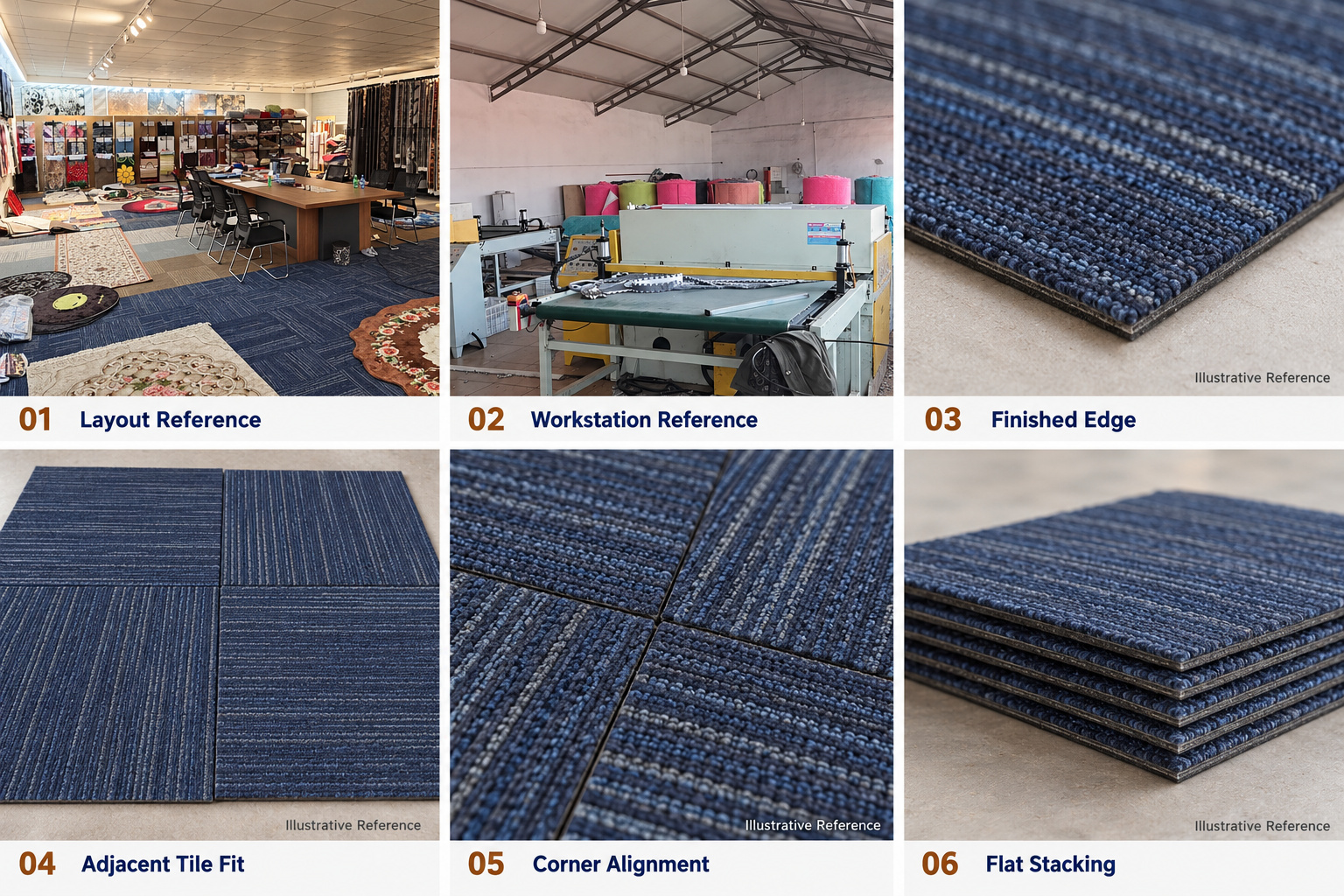 Protect Finished Tiles Before Packing
Finished pieces should retain their model, color and batch identification as they move to final quality inspection. Tiles are handled and stacked to protect corners, preserve flatness and avoid introducing dirt or edge damage.
Carton dimensions and packing arrangements should suit the selected tile format and construction.
What We Need for a Quote
Send your product reference, tile dimensions, pile construction, backing preference and quantity by color. Include close photographs of the required edge appearance, any special finishing request, sample approval criteria, logo or packaging needs, destination and shipping term.
We review finishing feasibility, sampling requirements, minimum order quantity and the order schedule for the selected product before confirming quotation terms.